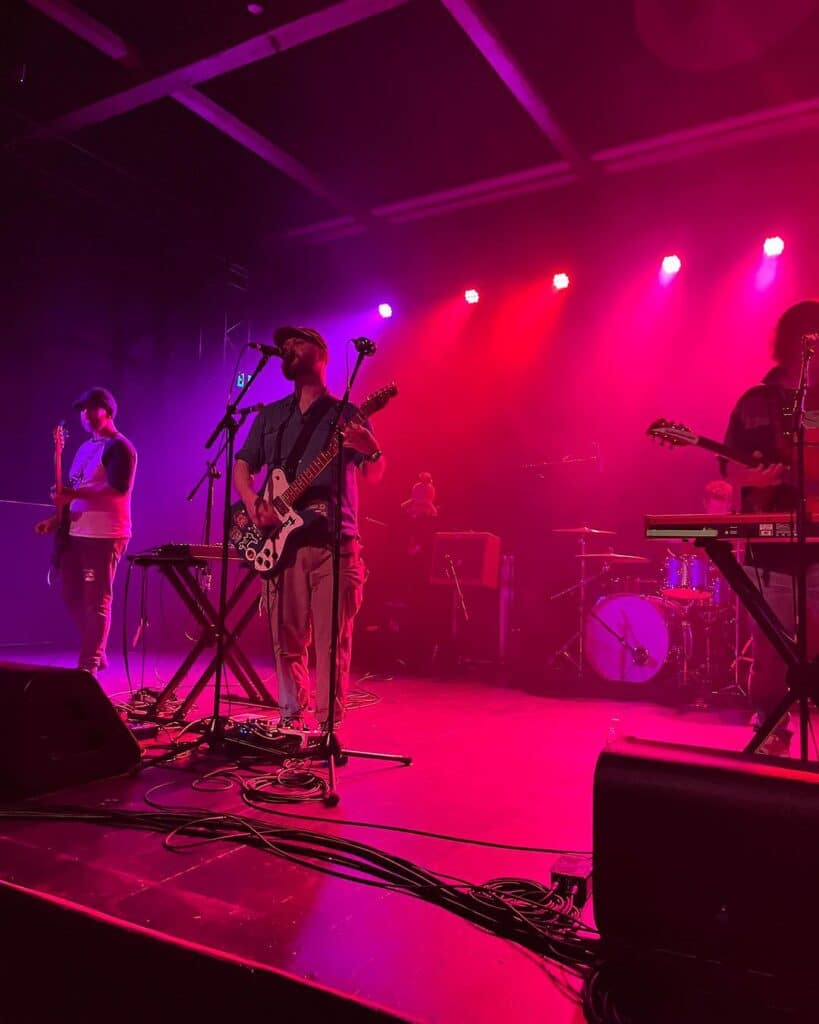
On Sunday November 17th, Nottingham based band and internet sensation Panchiko took the stage with support from Glare at the Music Farm. Their North American tour kicked off in October with the Charleston date originally not on their list of stops. The devastation from hurricane Helene led to them canceling their Asheville date, resulting in Music Farm welcoming them with open arms. Luckily, I got the chance to experience a night in the band’s presence.
Three original members including Owain Davies (vocals and producer), Andrew “Andy” Wright (keyboard and guitar), and Shaun Ferreday (bass) performed. Alongside them, two recent additions Robert “Rob” Harris (guitar) and John Schofield (drums).
While each member had their respective instrument, I was pleasantly surprised to observe them hopping between instruments. Wright was captivating on the guitar and keyboard, adding a dreamscape sound to the otherwise rock band. Davies multitasked on an electric sound board that he uses to produce their music while singing and playing guitar and Harris was passed the keyboard for a song.
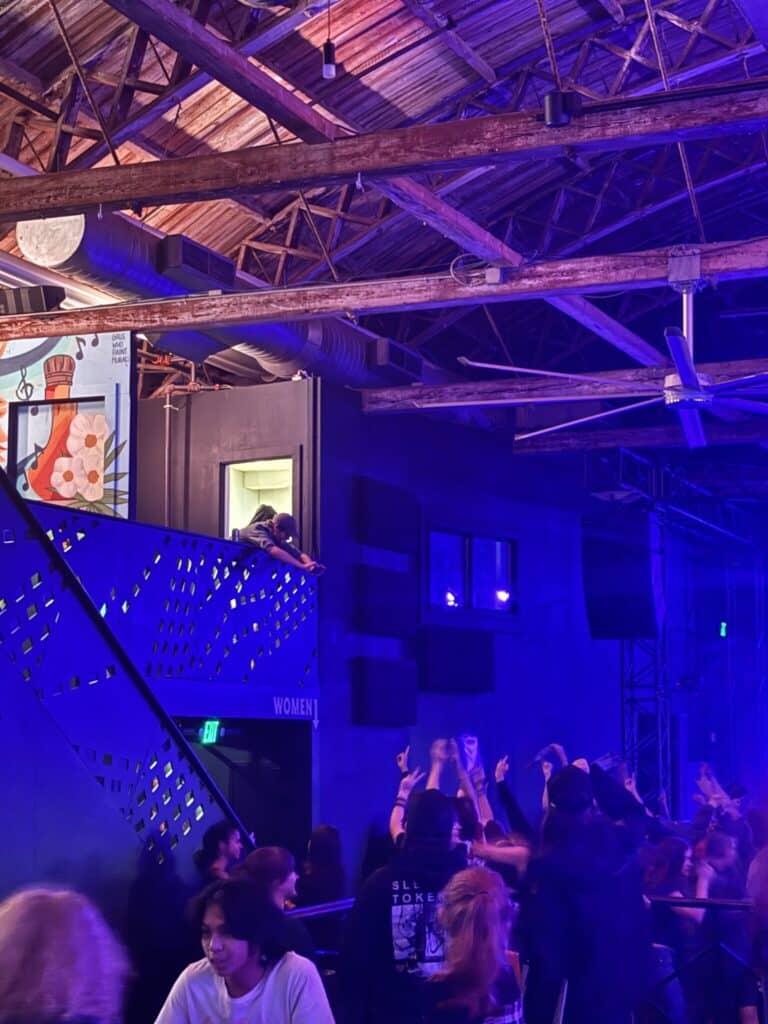
Even after the disbandment of Panchiko in 2001, their love for their music and fans still shines clearly through their performance and stage presence. The crowd in attendance was also one of the most diverse I had ever seen, in terms of race, gender, and age.
My experience was not what I expected— in the best way possible. A band from the late 90’s era of indie rock coming back together for a tour left me feeling as though I was part of something bigger.
Glare
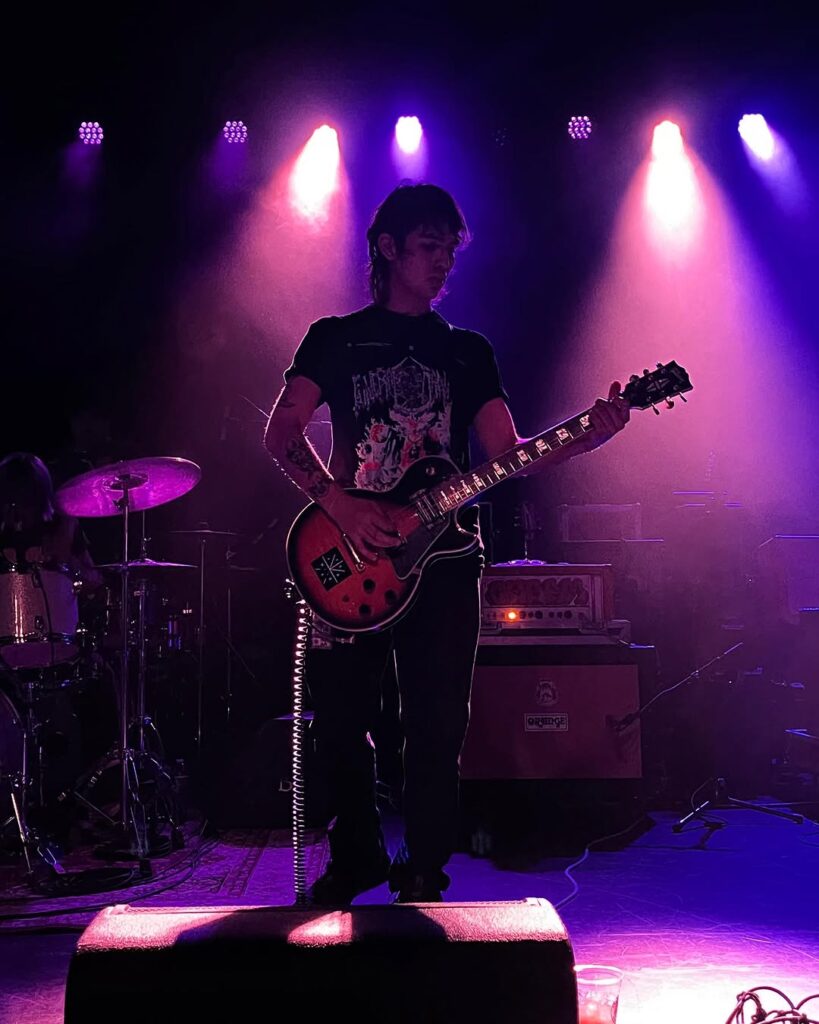
The fun began when the South Texas band Glare came out as openers and infused the room with a haze of shoegaze punk ballads. Their song choices ranged from their most popular singles such as “Void in Blue” and “Blank” to songs off their recent album “Heavenly”.
After seeing Glare do what they do best, I became a fan. With a sound similar to Deftones or Title Flight, they somehow made their songs exceptionally their own.
They had many of their own fans in the crowd, unmistakably there just to see them. One fan yelled out between songs, “You changed my life”! Their bassist responded with “You changed ours.”
Panchiko
Panchiko originated from Nottingham, UK during an era when other UK artists like Oasis, Pulp, and Jesus and Mary Chain were also gaining traction. Their eccentric style of music kept them out of the limelight and truthfully pretty separated from other infamous English bands at the time.
Each of their songs is layered with a small element of electronic production and heavy keyboard, which in the late 90s was inevitably drowned out by the rise of metal and punk.
Davies seemed to take charge as the face of the band, with his utterly haunting lead vocals echoing throughout the entire venue. His voice contains a special quality that is present in both recordings and live; it is a defining factor of this band’s brand.
Throughout the performance, Davies used two microphones, one including a modifier of some sorts. It was similar to a Shure527B microphone that can create a muffled, dreamy effect on the voice. Attention grabbing, concentrated vocals that add an overall resonant, bassy tone to the lyrics being sung.
For consisting of mostly members in their forties, Panchiko portrayed as an excitedly young, vibrant group with a lively performance from start to end. Davies revealed it was the band’s first time ever in Charleston, which made the concert feel all the more sentimental to the audience.
Influence Drives Sound
The synth keyboard, echoey vocals, microphone effects and ad libs sampled from video games and anime movies are just a few examples of Panchiko utilizing their own personal interests when creating music.
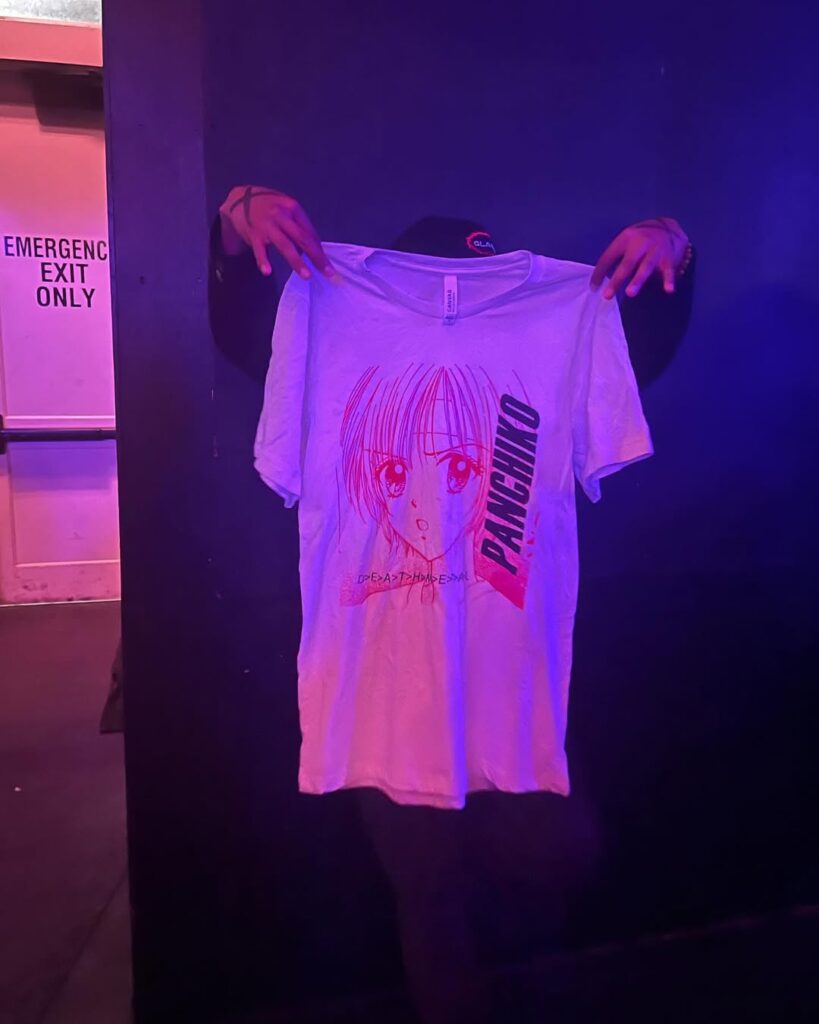
Davies has admitted to Studio Ghibli films such as Castle in the Sky, also commonly known as Laputa, being the inspiration for a song on their most famous album, D>E>A>T>H>M>E>T>A>L (2000). The cover art for this album is taken straight from a page of the anime Mint na Bokura.
The band entered the stage in great fashion, with the grandiose original theme song from the show “Black Beauty” by Denis King playing as they walked out from backstage. Each member assembled their instruments in sync as though they were superheroes about to embark on a quest to save the world (or save music).
This lighthearted energy peered through the band’s more minor-key, melancholy tunes, keeping an unsuspecting smile on my face for the entire hour and twenty-minute-long set.
The group started out the night with the song “The Eyes of Ibad”, that carries a middle eastern sounding bass line and whining tuning noises that break to make way for a soft melodic guitar with vocals. Davies has acknowledged that the Dune series was an inspiration for this song in particular.
After playing a meaningful mix of fan favorites, including “Laputa”, and sprinkling two new, never heard before songs into the set list, they tied everything up with the group’s notable Magnum Opus “D>E>A>T>H>M>E>T>A>L” and “Kicking Cars”.
Davies and Ferreday pulled their iPhone out after the show and snapped a selfie with the entire crowd. Everyone raised both their hands up in glee or wielded the universal sign for rock and roll.
For being a band that was relevant more than a decade ago, they showed how much the music they care about is still a joy to perform and just how timeless the art they created really is.