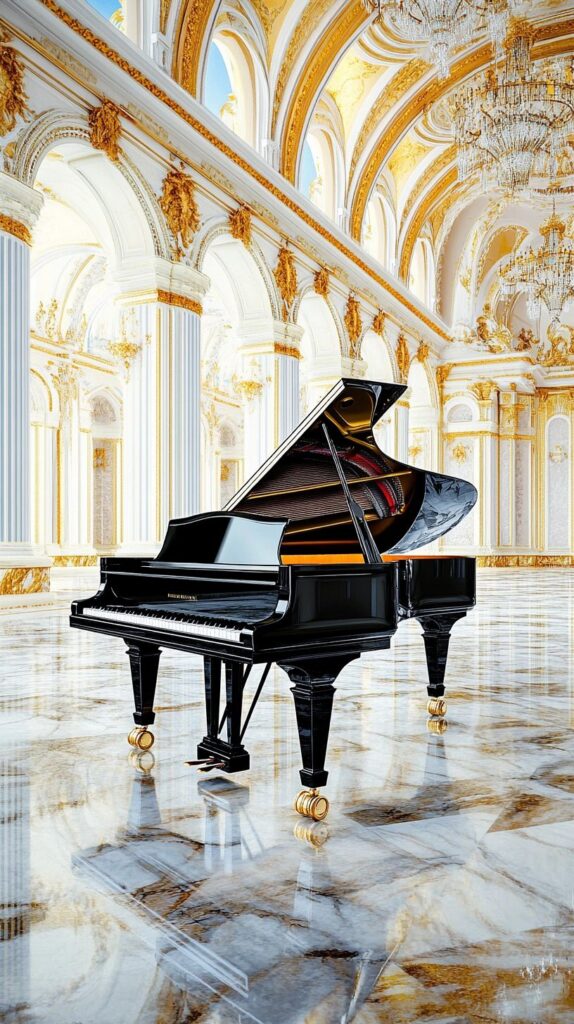
The grand piano is one of the most iconic and elegant instruments in music history. Its majestic appearance and extraordinary sound have captivated audiences for centuries. But there’s more to a grand piano than meets the eye (or ear). Let’s explore some fascinating facts about this musical marvel.
1. A Grand Piano Has Over 12,000 Parts
Believe it or not, a single grand piano is made up of more than 12,000 individual parts, with around 10,000 of those being moving components. From the hammers and strings to the intricate damper system, every piece plays a vital role in producing the piano’s rich sound.
2. The Strings Are Under Massive Tension
The strings of a grand piano are tightly wound and held under immense tension. In fact, the total tension across all the strings can add up to 20 tons—or roughly the weight of four elephants! This is one reason why the piano’s iron frame, or “plate,” is so crucial to its structure.

3. The Shape Enhances Its Sound
The iconic shape of a grand piano isn’t just for looks—it’s a key part of its sound design. The curved body allows for longer strings, especially in the bass register, which produces richer and more resonant tones compared to upright pianos.
4. The Pedals Have Different Functions
Most grand pianos come with three pedals: the sustain pedal (on the right), the soft pedal or “una corda” (on the left), and the sostenuto pedal (in the middle). Each serves a unique purpose, from sustaining notes to softening the sound or holding specific notes while others are played normally.
5. The First Grand Pianos Were Called “Fortepianos”
When Bartolomeo Cristofori invented the piano in the early 1700s, it was initially called the “fortepiano.” This name reflects its ability to play both soft (piano) and loud (forte) dynamics, a revolutionary feature for its time.
6. Grand Pianos Come in Many Sizes
Not all grand pianos are created equal. They range in size from “baby grands,” which are as small as 4’6″ long, to “concert grands” that can exceed 9 feet. Larger pianos typically have a fuller, more resonant sound, making them ideal for concert halls.

7. Piano Keys Aren’t Made of Ivory Anymore
Historically, piano keys were made with ivory, but this practice ended in the mid-20th century due to environmental and ethical concerns. Today, most keys are made of high-quality plastic materials designed to mimic the feel of ivory.
8. A Grand Piano Is Surprisingly Heavy
Despite their graceful appearance, grand pianos are incredibly heavy. A standard grand piano can weigh anywhere from 500 to 1,200 pounds, depending on its size and construction. This makes moving one a task best left to professionals!
9. Tuning Requires Expertise
Tuning a grand piano isn’t something you can easily do yourself. It takes a skilled piano technician to adjust the tension of the strings and ensure the instrument is in perfect harmony. Most pianos need tuning at least twice a year to maintain their sound.
10. Some Grand Pianos Are Worth Millions
Luxury grand pianos, especially those custom-designed or crafted by renowned manufacturers like Steinway & Sons or Bösendorfer, can cost millions of dollars. These instruments are often considered works of art, with exquisite craftsmanship and unparalleled sound quality.
Conclusion
The grand piano is more than just an instrument—it’s a masterpiece of engineering, artistry, and history. Whether you’re a musician, a music lover, or just someone who appreciates fine craftsmanship, there’s no denying the allure of this incredible creation.