
The acoustic guitar is more than just an instrument—it’s a symbol of storytelling, emotion, and timeless music. From folk songs and rock ballads to classical compositions, this versatile instrument has been a key player in music history.
Here are ten amazing facts about acoustic guitars that will deepen your appreciation for this beloved instrument.
1. The Acoustic Guitar Has Ancient Roots
The acoustic guitar’s history stretches back thousands of years. Instruments resembling the modern guitar have been found in ancient Egyptian, Mesopotamian, and Roman cultures. The guitar as we know it evolved from the Spanish vihuela in the 15th century.
2. The Sound Hole Shapes the Tone
The iconic round sound hole in the center of an acoustic guitar isn’t just a design choice—it plays a vital role in projecting the instrument’s sound. Variations in sound hole shape and size can change the guitar’s tone, and some guitars even feature unique sound hole designs for specific tonal effects.

3. Wood Choice Affects the Sound
The type of wood used to make an acoustic guitar greatly impacts its tone. For instance, spruce is a common choice for the top (or soundboard) because of its ability to produce a bright and resonant sound, while mahogany offers a warmer, richer tone. The combination of woods used in a guitar is often referred to as its “tonewood.”
4. Steel Strings vs. Nylon Strings
Acoustic guitars are typically strung with either steel or nylon strings, and each type creates a different sound. Steel strings produce a bright, crisp tone and are used for genres like folk, country, and pop. Nylon strings, on the other hand, have a softer, mellower sound and are commonly used in classical and flamenco music.
5. The Dreadnought Revolutionized Guitar Design
In 1916, Martin Guitars introduced the dreadnought, a larger-bodied guitar with a booming sound and greater volume. Named after a British battleship, the dreadnought design became the standard for modern acoustic guitars and remains popular to this day.
6. Acoustic Guitars Have No Electronics (Usually!)
Unlike electric guitars, acoustic guitars produce sound naturally through the vibration of strings and the resonance of the wooden body. However, many modern acoustic guitars come equipped with pickups and preamps, making them “acoustic-electric” and allowing them to be amplified during performances.
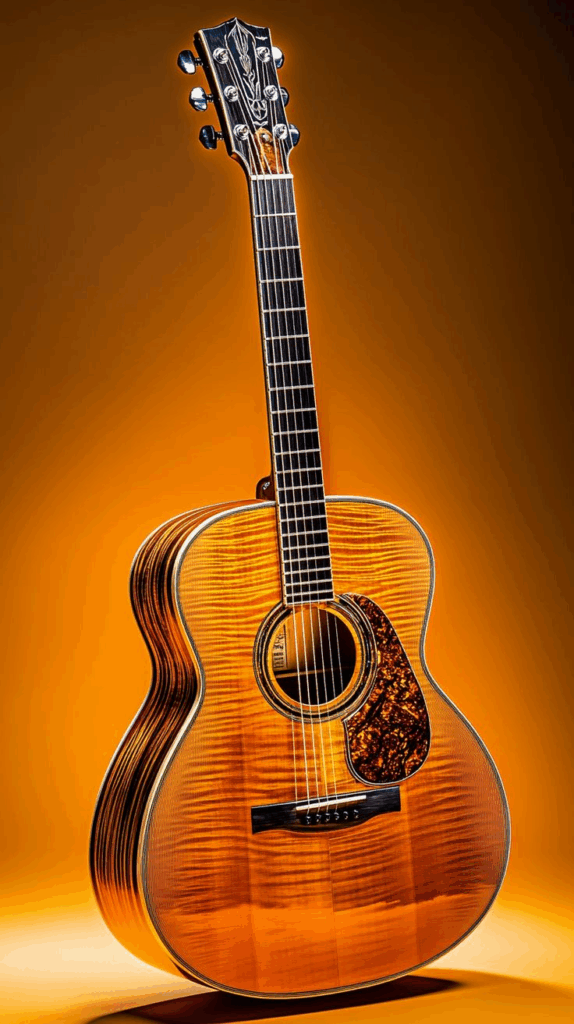
7. It Takes Months to Build a Guitar
Crafting an acoustic guitar is a labor-intensive process that can take several months, especially when handmade by skilled luthiers. From selecting and curing the wood to shaping the body and assembling the parts, every step requires precision and expertise.
8. Frets Were Once Gut Strings
In the early days of guitar history, frets weren’t metal like they are today. Instead, they were made from strips of gut string tied around the neck of the instrument. The switch to metal frets allowed for greater durability and more precise intonation.
9. The 12-String Guitar Doubles the Fun
A 12-string acoustic guitar features pairs of strings tuned in octaves or unison, creating a fuller, richer sound. This type of guitar is often used in folk and rock music to add a shimmering, chorus-like effect to songs.
10. The Guinness World Record for Largest Guitar Ensemble
In 2009, over 6,300 guitarists gathered in Shillong, India, to play Bob Dylan’s “Knockin’ on Heaven’s Door” together, setting the record for the largest guitar ensemble in history. Many of the guitars played that day were acoustics, showcasing the instrument’s universal appeal.
Conclusion
From its ancient origins to its modern innovations, the acoustic guitar is a true masterpiece of musical engineering. Its warm, natural sound has inspired generations of musicians and continues to be a cornerstone of countless genres. Whether you’re a guitarist or a listener, there’s no denying the acoustic guitar’s enduring magic.