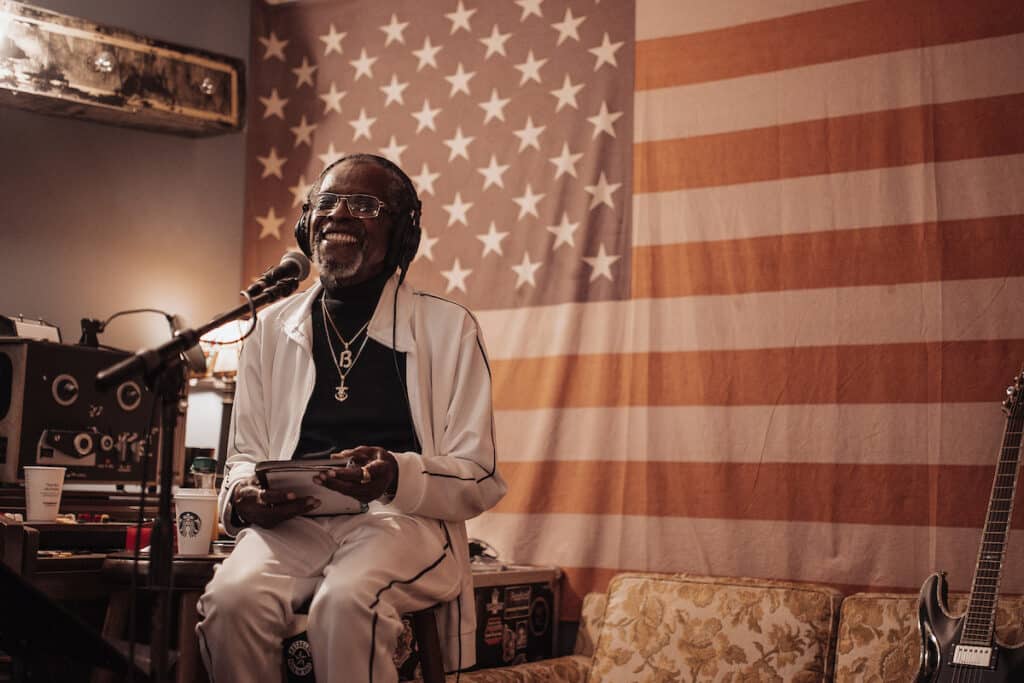
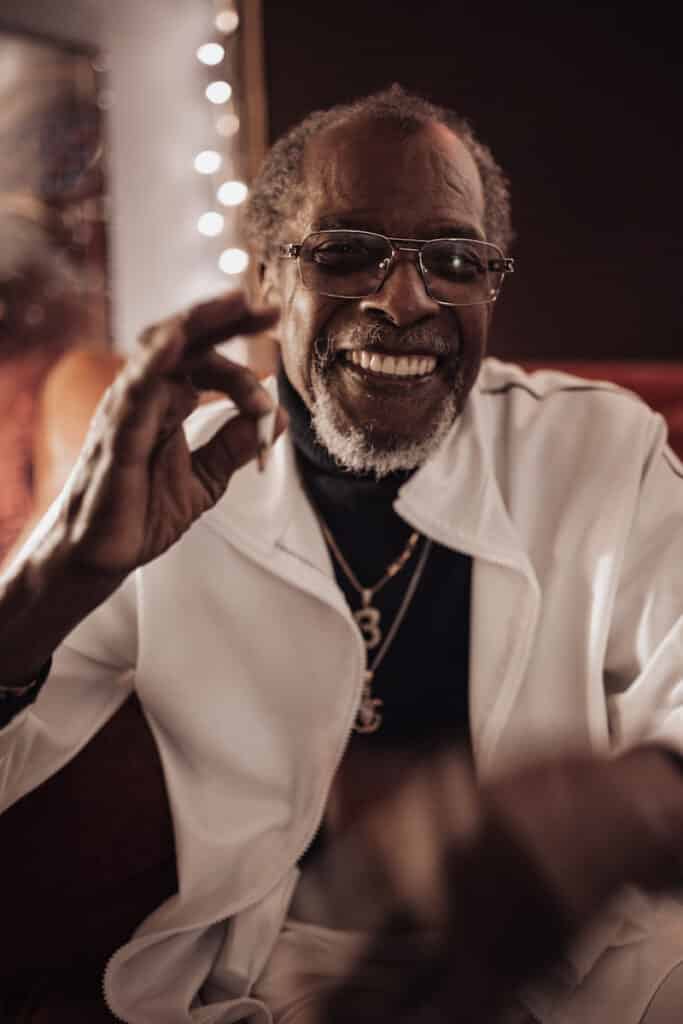
Bill Wilson has released his third solo album, Here I Am Again. This album follows nearly seven decades of soul music from the Charleston native singer, songwriter, and saxophonist.
At 84 years old, Bill has a storied history. He grew up in the Lowcountry in the 1940s and traveled the world playing music before moving back home in 1996. Today, he performs multiple nights per week around Charleston, sharing soul music and positivity with all who catch him.
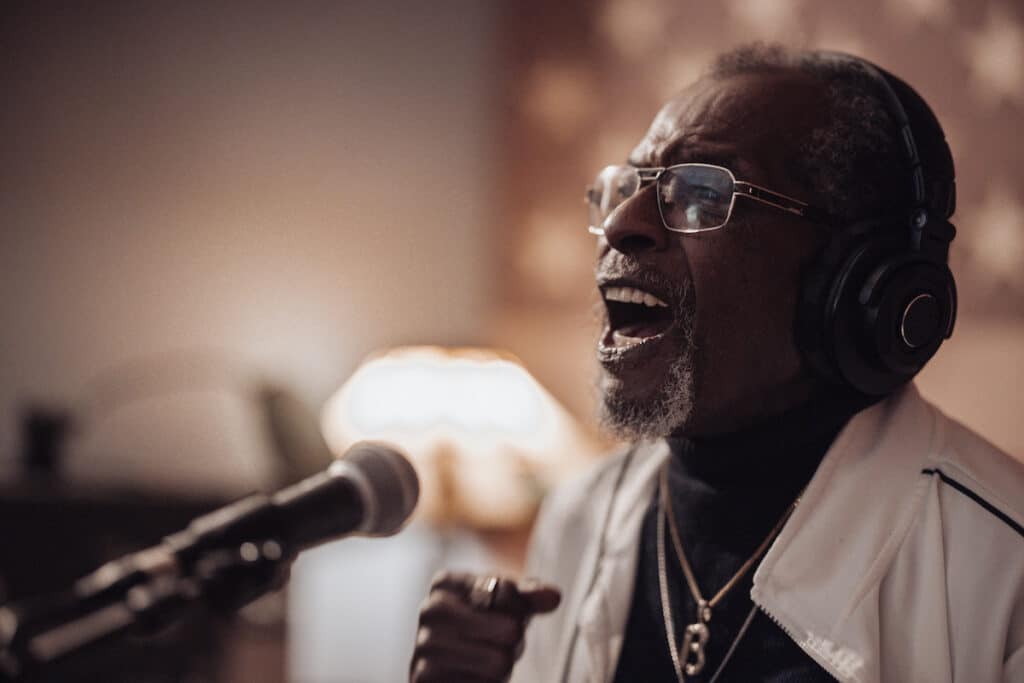
We sat down over a beer at Lofi Brewing to discuss life, music, and the story behind the album, Here I Am Again. The sound is warm and organic, with tasteful instrumentation, swelling guitar and saxophone solos, and a timeless feel anchored by Bill Wilson’s voice and perspective.
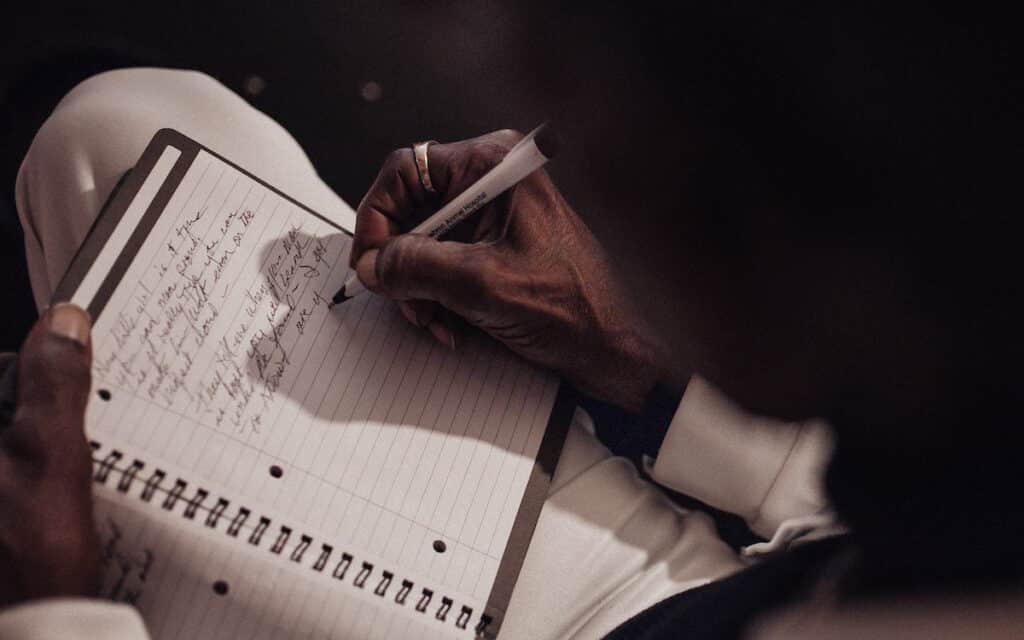
“I look at writing songs as an expression of what a flower might say,” Bill says. “As it comes from the seed, as it grows and gains its style and its strength. You think the plants wonder what is their purpose in life? They don’t worry about it, they just keep shining and shining. And when they grow old, and reach their greatest maturity, they die. But the family tree does not die, roots don’t die. The roots keep on shooting out there until they long can provide.”
The Making of Here I Am Again
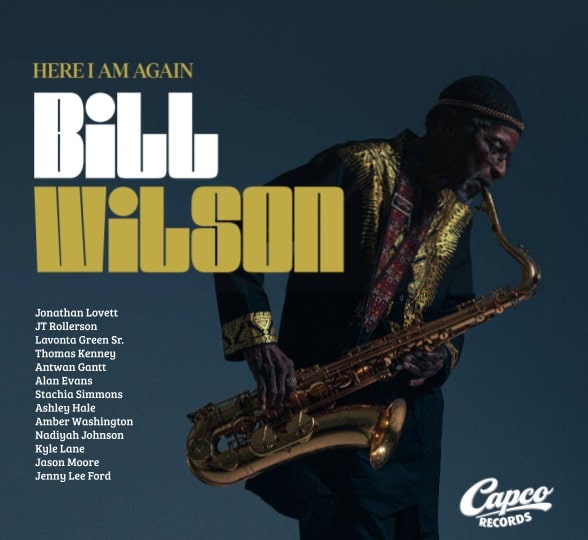
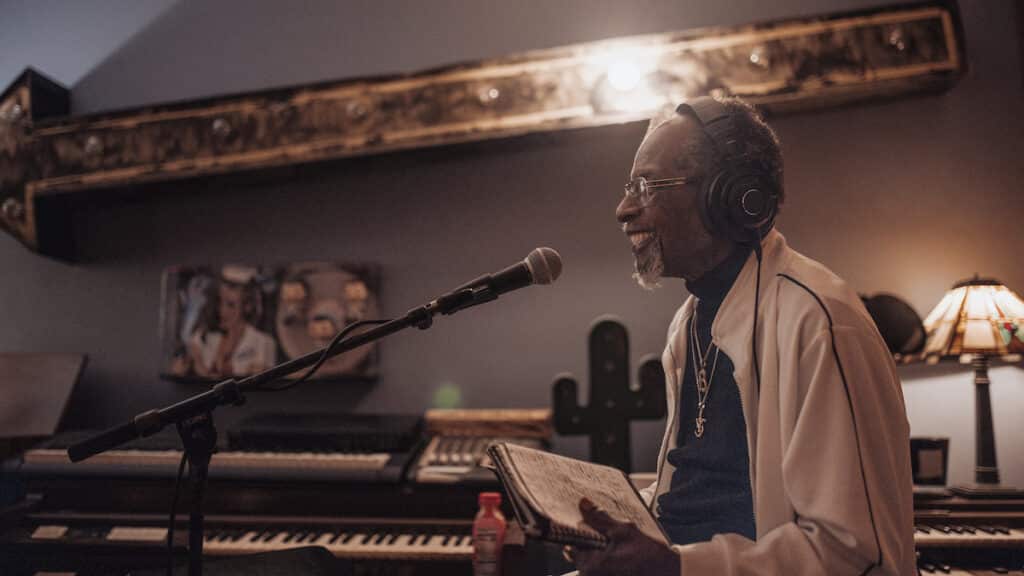
Here I Am Again is mostly new material, following 2018’s Stand Up!, with Soul of Christmas (2020) in between. It was recorded live over two days in Charleston, with a cast of musicians from Charleston and beyond, including:
- Bill Wilson – Vocals & Tenor Saxophone
- Jonathan Lovett – Keys
- JT Rollerson – Drums & Percussion
- Lavonta Green Sr. – Bass
- Thomas Kenney – Guitar
- Antwan Gantt – Guitar
- Alan Evans – Percussion, Keys, Guitar
- Stachia Simmons – Background Vocals
- Ashley Hale – Background Vocals
- Amber Washington – Background Vocals
- Nadiyah Johnson – Background Vocals
- Jenny Lee Ford – Trombone
- Kyle Lane – Trumpet & Flugelhorn
- Jason Moore – Alto & Tenor Saxophone

The album contains two re-recordings of Bill Wilson classics: “Won’t Somebody Help Me?” and “Are You For Real?”. These tracks were originally recorded by legendary South Carolina soul group Moses Dillard & The Tex-Town Display, fronted by Bill Wilson and Peabo Bryson. The band’s lone album, Now!, has since become a rare collector’s item.
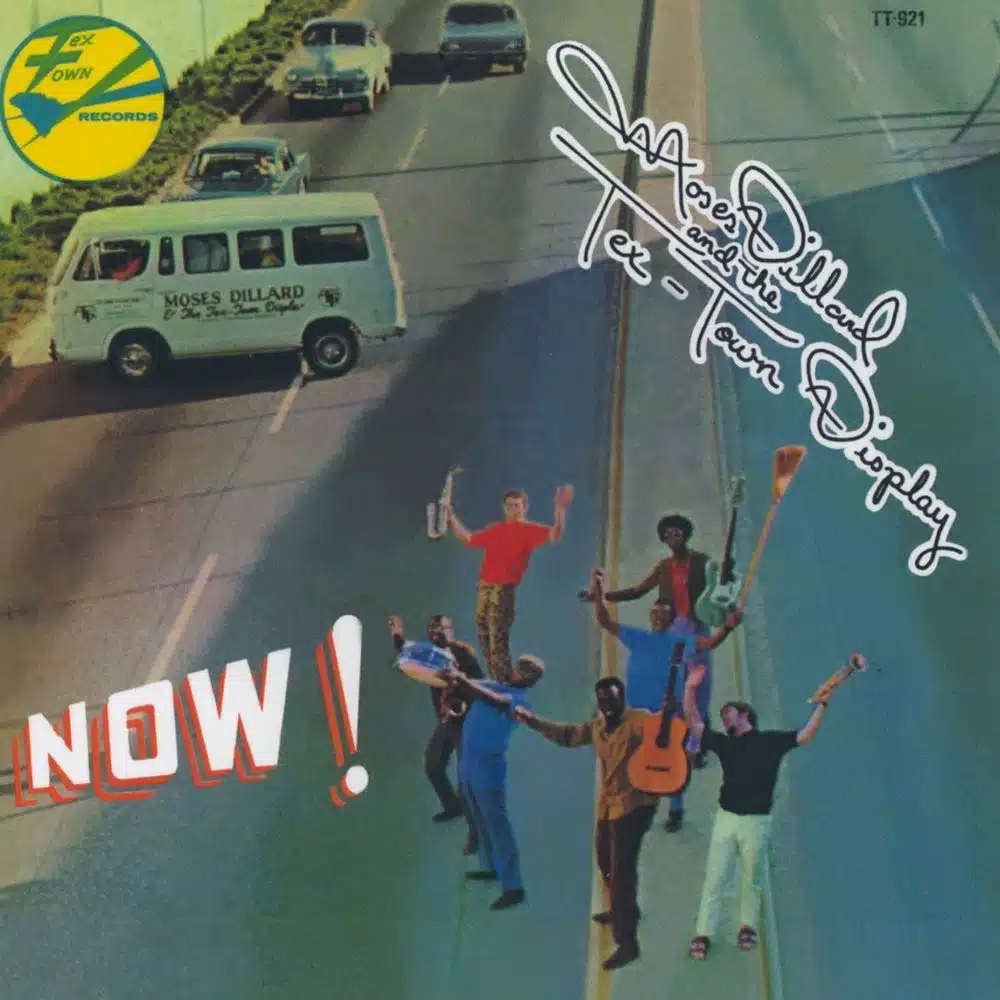
In 1969, Bill Wilson was 28 years old, and future multi-Grammy winner Peabo Bryson was 18. They had a sibling-like dynamic that translated to an excellent creative synergy. The original recordings were done at the famous Muscle Shoals Sound Studio in Alabama, with the arrangement done by Donny Hathaway.
The Tex-Town Display was the house band for the first-ever Miss Black America pageant in 1968 at Madison Square Garden. Bill Wilson was there playing the saxophone. Afterwards, they made an album with the winner, Gloria O. Smith, and went on a USO Tour with her during the Vietnam War, bringing entertainment overseas for American soldiers.
Sharing Love, Peace, and Happiness
Bill Wilson has dedicated his life to music, playing in rooms both big and small, with hundreds of different musicians. Through it all, he has developed a positive philosophy on life that is captured perfectly on Here I Am Again.
“Community comes with love,” Bill says. “Love builds a community, love tightens a community. Love wipes out battles in any community because if you’re loving you don’t have time to fight. Everybody loves, but will that ever be a reality? A world just full of love? We’re gonna be fighting until the end of the world for that one thing to happen. If we have total world peace, total world peace, what do you think would happen?”
The final song on the album, a reggae tune called “What If?”, wrestles with these questions.
“When you hear it you can understand what we just said,” Bill explains. “These are the kind of things that I’m usually thinking about when I’m writing songs. Those three things: love, peace, and happiness. Love first. If you got so much love for me, where you find time to find that god damn hate? So don’t say I love you if you don’t mean it because it’ll come and back slap you in the face. Love is forever.”
Bill predicts that despite the horrors of today’s world, the power of love will prevail.
“Slowly, the world is going to become stronger in mind, stronger in bond,” he says. “Because you can’t just sit back and watch all the things that are happening all over the world and not feel something for the people that are going through it.”
Charleston Roots
Another core principle in Bill’s life has been family. He reflects on his upbringing in Charleston, particularly the time spent at his uncle’s restaurant lounge, as formative for the person that he has become.
“Charleston’s my life. Charleston is where my seed was dropped, you know?,” Bill says. “I’ve tried to cultivate that seed myself. My family tree is a strong family tree. I was brought up in an atmosphere of learning how to survive. Learning how to get things on your own at an early age.”
Bill’s first job was at 11 years old, working at the grocery store. But even before that, he worked in his uncle’s restaurant.
“I’d go in there every day. I was like a superintendent, you know? I’d go in and do things I wanted to do. I’d clean it up for him. He noticed that. He said, Boy, you didn’t have to come in here and do that. I didn’t mind, because he gave me my first bicycle. He said, Now you take this bicycle, learn to ride it, and you’re going to get you a paper route. Teaching me how to be self-sufficient.”
During this time, Bill observed his uncle as a strong role model. Saturdays were particularly busy in the lounge, with many prominent local figures stopping by. Bill would hang out and listen to their conversations, learning as much as he could.
“I’m watching these people and how they brought a city together. It was a system. These were people that all were building jobs. All of the black entrepreneurs would be there on Saturday. Mailman, insurance man, anybody that was making money. As well as Caucasian men would come in. People of the police department. It let me know that my uncle was a very strong, influential person in the city at the time.”
Closing Thoughts: Bill Wilson’s Legacy
Bill Wilson’s joy has been felt by many all over the world, and his roots in the Lowcountry run deep. With over 70 years of performing in Charleston, his story is forever woven into the fabric of the city, and will long provide a creative wellspring, and positivity to those who hear his music and his story.